We're Thinking About AI in SAP the Wrong Way
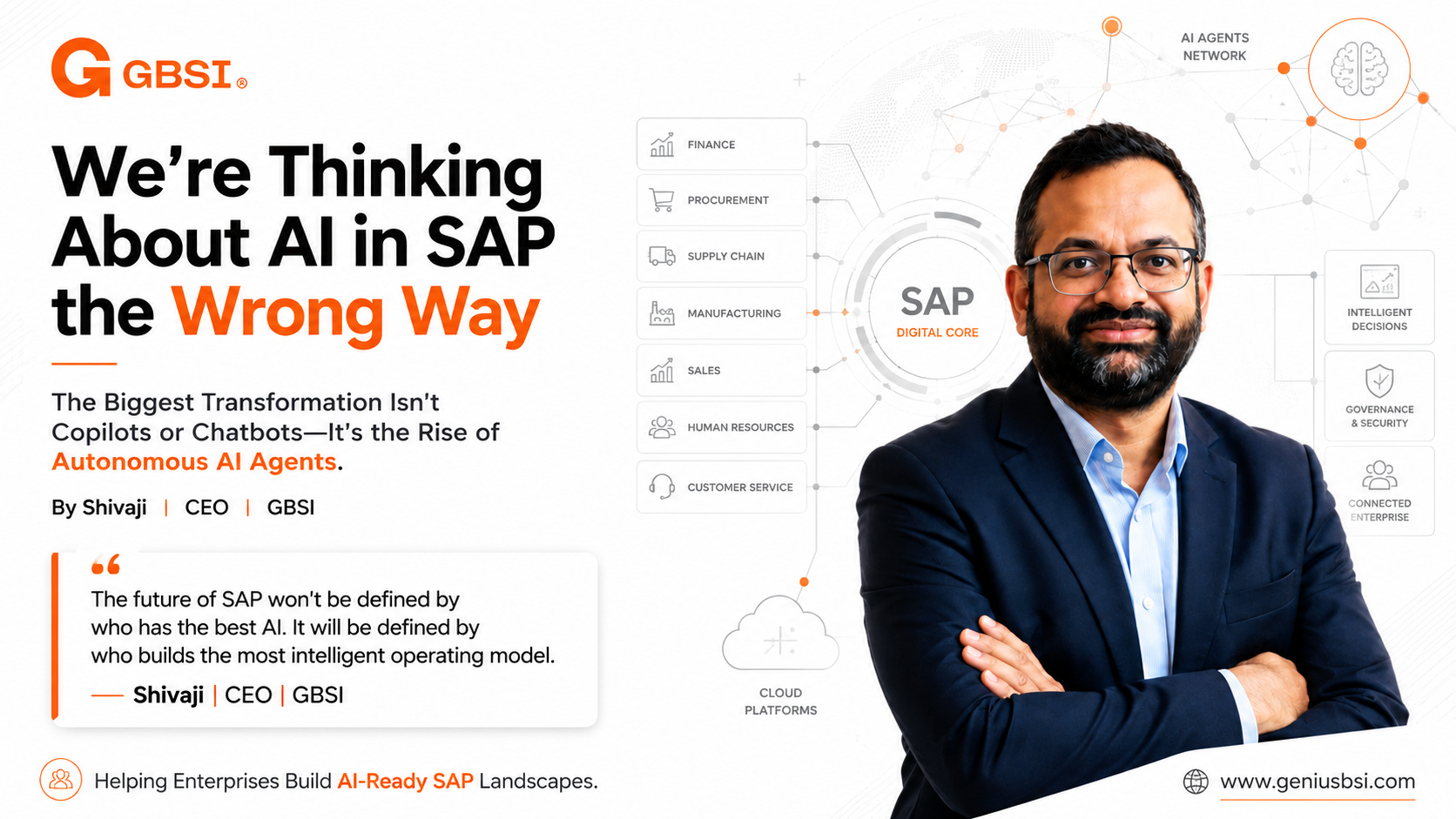
The Biggest Transformation Isn't Copilots or Chatbots—It's the Rise of Autonomous AI Agents
Artificial Intelligence has become the defining conversation in enterprise technology. Across the SAP ecosystem, organizations are exploring copilots, chatbots, and generative AI to improve productivity, simplify user interactions, and automate routine tasks. While these innovations are valuable, they represent only the first phase of AI adoption.
The next transformation will be far more significant. It won't be about helping employees work faster—it will be about enabling software to execute business processes intelligently. That is where AI agents enter the picture. Unlike traditional AI assistants that wait for instructions, AI agents can understand business objectives, analyze enterprise data, coordinate activities across systems, and take action within defined governance boundaries. For SAP customers, this represents a shift from intelligent software to intelligent operations.
The Future of SAP Is About Execution, Not Information
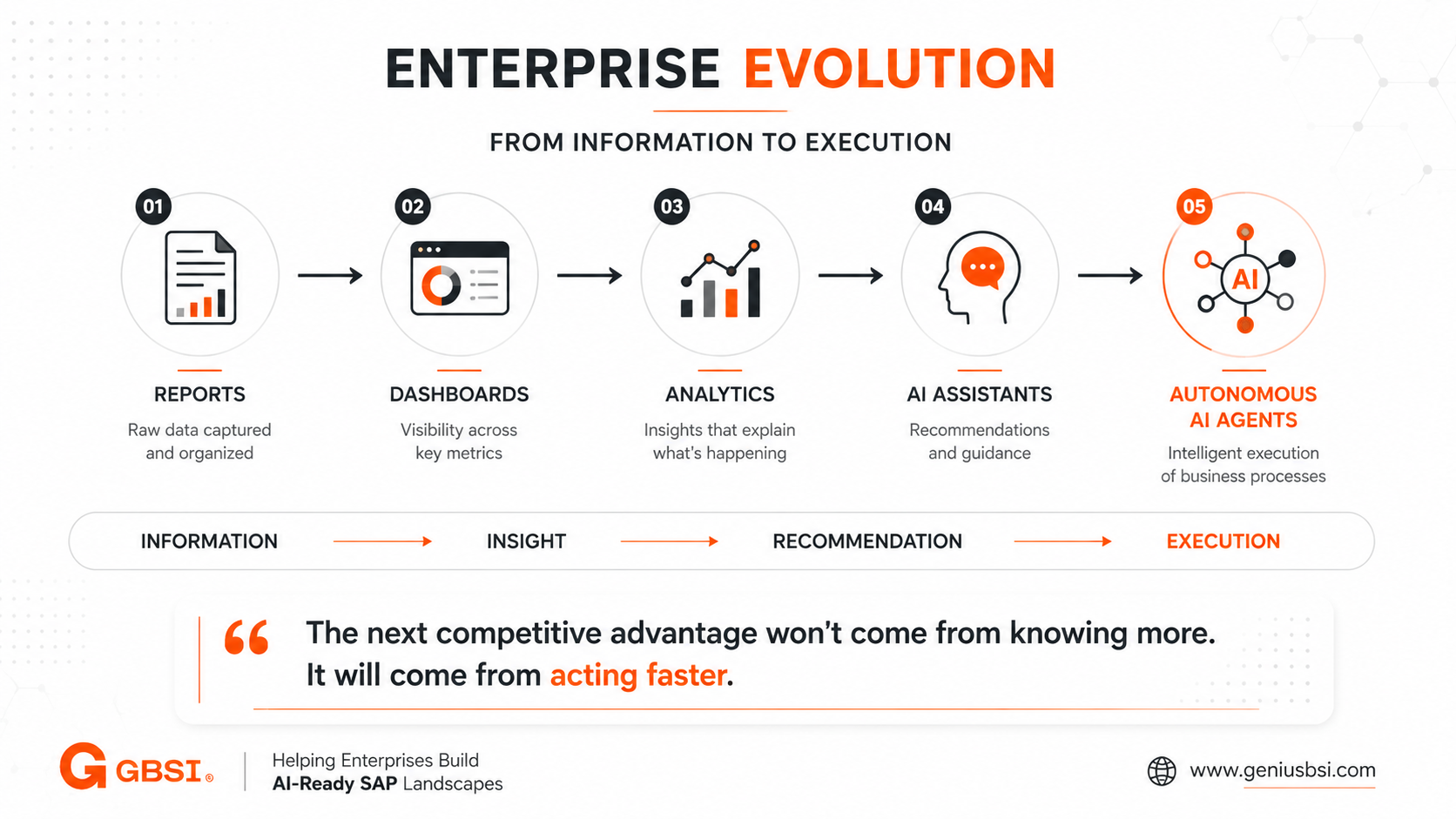
For years, organizations have invested heavily in ERP modernization, analytics platforms, and real-time dashboards. Business leaders today have more information than ever before. They can monitor supply chains, track financial performance, analyze customer behavior, and measure operational efficiency in real time.
Yet information alone rarely creates competitive advantage.
A dashboard can identify declining inventory, but it cannot replenish stock. A report can highlight supplier delays, but it cannot coordinate procurement, logistics, and finance to resolve the issue. Business value is created only when insight leads to execution. AI agents bridge that gap by transforming enterprise intelligence into coordinated business action, allowing organizations to respond faster and more proactively than ever before.
From Automation to Autonomous Operations
Traditional automation follows predefined rules. It performs repetitive tasks exactly as it was programmed to do. AI agents, however, are designed to understand context, evaluate multiple possibilities, collaborate with other systems, and recommend—or even execute—the next best action.
Imagine a procurement agent within SAP detecting a supply disruption before production is affected. Instead of simply generating an alert, it identifies qualified suppliers, compares pricing and delivery schedules, initiates approval workflows, updates purchasing plans, and informs stakeholders automatically. The role of employees shifts from managing routine activities to validating strategic decisions.
This is why AI agents should not be viewed as another automation tool. They represent a new operational layer that enables enterprises to become more adaptive, resilient, and responsive.
Every SAP Function Will Be Reimagined
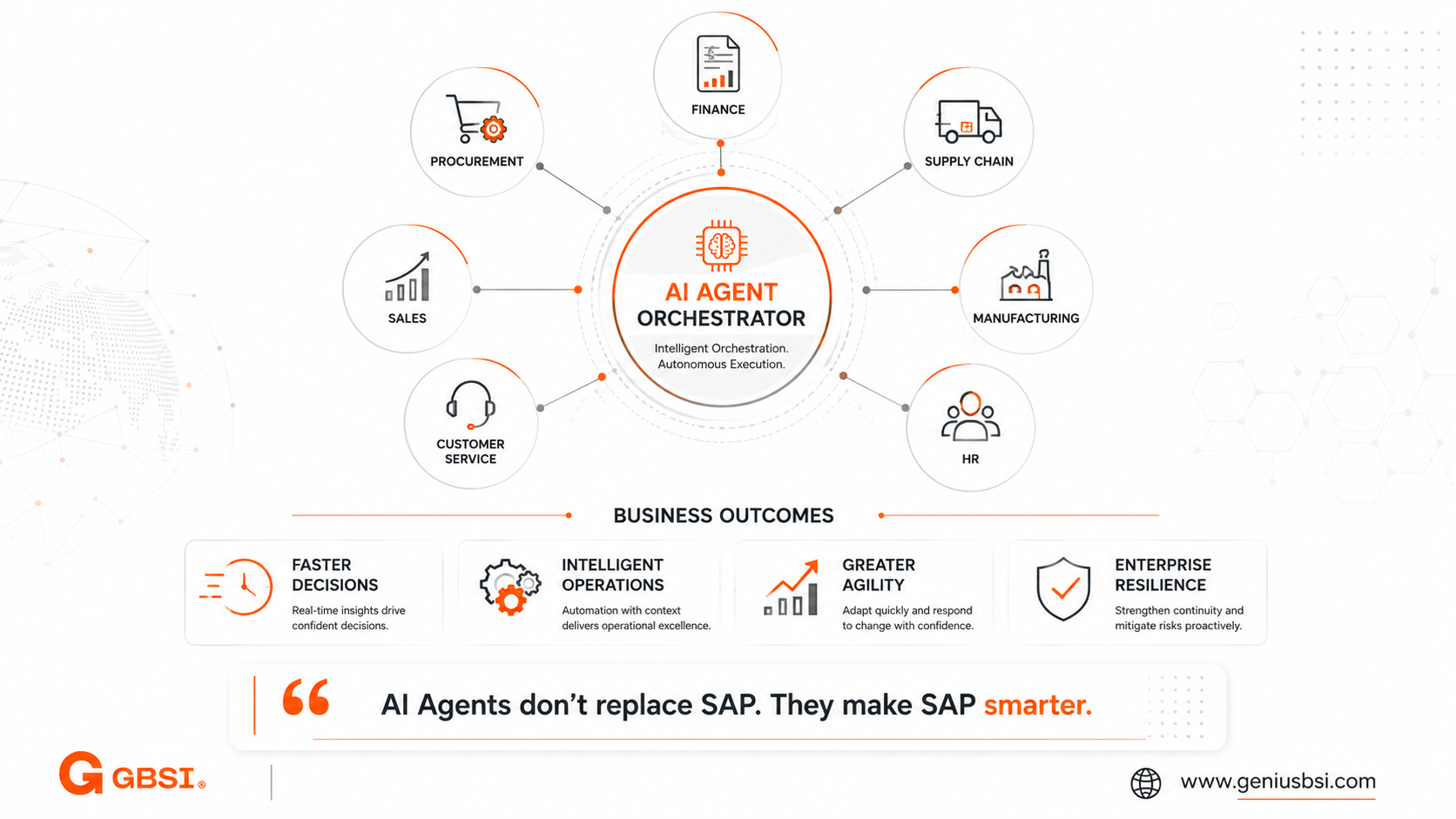
The impact of AI agents will extend across every major SAP process.
Finance teams will benefit from intelligent monitoring of transactions, faster financial close cycles, and continuous compliance checks. Supply chains will become more resilient as AI agents predict disruptions, optimize inventory, and coordinate logistics in real time. Manufacturing organizations will use intelligent agents to improve production planning and predictive maintenance, while sales and customer service teams will leverage AI to personalize engagement and resolve issues more efficiently.
The real opportunity lies in connecting these functions. Instead of operating as isolated departments, finance, procurement, manufacturing, customer service, and supply chain will increasingly collaborate through networks of intelligent agents working toward shared business outcomes.
That is a very different vision from simply adding AI to existing processes.
Human Expertise Will Become More Valuable, Not Less
Every technological shift raises concerns about whether machines will replace people. The emergence of AI agents has sparked similar discussions across the SAP community.
History suggests a different outcome.
Technology consistently automates repetitive work while increasing the value of strategic expertise. As AI agents take responsibility for routine coordination and operational execution, SAP professionals will spend more time designing business processes, strengthening governance, aligning stakeholders, and driving enterprise transformation.
Organizations do not succeed because they automate transactions. They succeed because they make better business decisions. AI can accelerate execution, but determining business priorities, balancing competing objectives, and managing organizational change will continue to require human judgment.
The future SAP consultant will not simply configure systems. They will architect intelligent enterprises.
The Biggest Challenge Isn't AI—It's Enterprise Readiness
Many organizations are eager to experiment with AI agents, but technology alone is not enough. Intelligent agents rely on clean master data, standardized business processes, integrated applications, and well-defined governance. Without these foundations, AI will simply execute inefficient processes faster.
Preparing for AI agents therefore begins with strengthening the digital core. Modern SAP landscapes, cloud adoption, process harmonization, and enterprise data governance are no longer optional initiatives—they are prerequisites for autonomous operations.
Organizations that invest in these capabilities today will be better positioned to unlock the full value of AI tomorrow.
The GBSI Perspective
At GBSI, we believe the conversation around AI in SAP needs to evolve beyond copilots and productivity tools. The real opportunity lies in building intelligent enterprises where AI agents work alongside people to orchestrate business processes, improve decision-making, and accelerate execution across the organization.
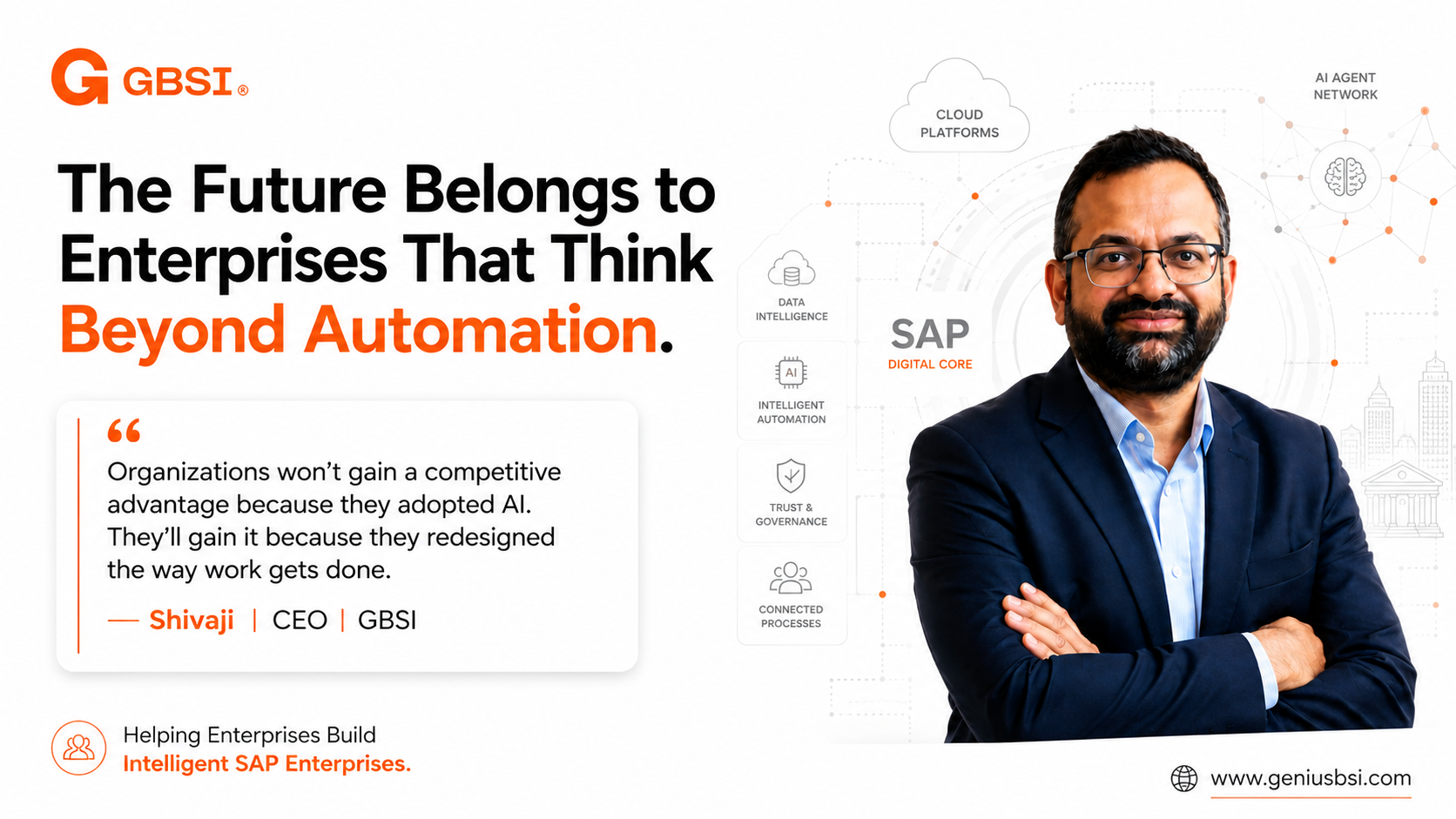
The future of SAP will not be defined by who deploys the most AI features. It will be defined by who creates the most intelligent operating model—one that combines trusted enterprise data, modern SAP architecture, effective governance, and experienced business leadership.
The next generation of enterprise transformation will not be driven by better dashboards or faster reports. It will be driven by organizations that move from automation to autonomy, from transactions to intelligent execution, and from managing processes to orchestrating outcomes.
The question is no longer whether AI agents will become part of SAP operations. They will.
The real question is whether your enterprise is preparing for that future today.