Introduction
Enterprise transformation is entering a new phase.
For years, organizations have focused on digitizing business processes, implementing ERP platforms, and documenting how work gets done. Process repositories became essential assets during SAP implementations, helping organizations standardize operations and accelerate transformation initiatives.
Today, that is no longer enough.
As Artificial Intelligence becomes embedded across enterprise applications, organizations require something far more dynamic than static process documentation.
They need living process intelligence.
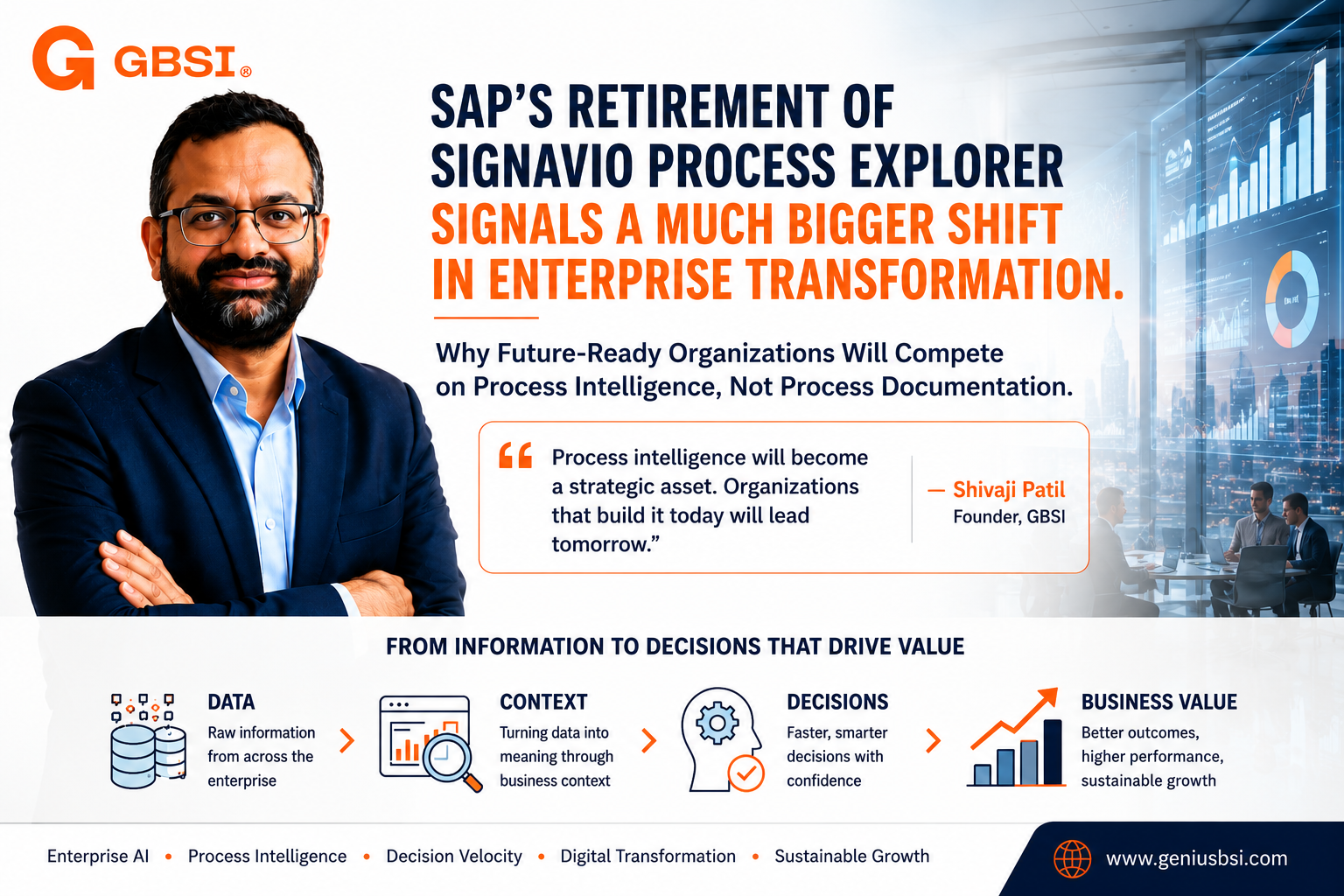
SAP's recent announcement to retire Signavio Process Explorer and consolidate its capabilities into Signavio Process Navigator may appear to be a routine product transition.
I believe it represents something much larger.
It reflects SAP's long-term vision for AI-ready enterprises, where business processes become continuously evolving assets that support automation, intelligent decision-making, and operational resilience.
For business leaders, this is not simply a platform migration.
It is a signal that enterprise transformation itself is evolving.
The Era of Static Process Documentation Is Coming to an End
Historically, organizations documented business processes primarily to support ERP implementations.
Process maps were created.
Workshops were conducted.
Business scenarios were validated.
Documentation was completed.
Then, in many cases, those documents remained largely unchanged for years.
Meanwhile, the business continued to evolve.
New products were introduced.
Supply chains changed.
Customer expectations shifted.
Compliance requirements increased.
Manual workarounds emerged.
Over time, documented processes often reflected how the business used to operate rather than how it actually operated.
That gap has become increasingly difficult to ignore.
AI Requires Dynamic Business Context
Artificial Intelligence does not simply need data.
It needs business context.
To automate decisions, recommend actions, or optimize operations, AI must understand how business processes actually function across finance, procurement, manufacturing, warehousing, logistics, and customer operations.
Static process repositories cannot provide that level of intelligence.
Organizations need continuously updated process knowledge that reflects operational reality.
This is precisely why SAP is investing more heavily in platforms like Signavio Process Navigator.
The future belongs to organizations that can combine ERP data, process intelligence, and AI into a unified decision-making environment.
Process Intelligence Is Becoming a Strategic Asset
For many years, organizations viewed process documentation as an implementation requirement.
Leading enterprises are beginning to view process intelligence very differently.
It is becoming a competitive advantage.
Organizations with accurate, continuously managed process intelligence can:
- Accelerate SAP S/4HANA transformations
- Improve process standardization
- Reduce operational complexity
- Increase automation success rates
- Enable AI-driven recommendations
- Strengthen governance and compliance
- Respond faster to business change
Process intelligence is no longer just supporting transformation.
It is becoming the foundation of transformation.
What Business Leaders Should Take Away
The retirement of Process Explorer should not be viewed as simply replacing one SAP application with another.
It should encourage organizations to ask more important questions.
Do our documented processes accurately reflect how our business operates today?
Are we continuously improving our processes, or only documenting them during implementations?
Can our existing process architecture support AI initiatives over the next five years?
These questions will ultimately have a greater impact on transformation success than the migration itself.
The Future Will Belong to Process-Driven Enterprises
Over the next decade, organizations will increasingly compete on how quickly they can adapt their business processes.
Technology platforms will continue to evolve.
AI capabilities will continue to improve.
ERP systems will continue to modernize.
The organizations that create the greatest business value will be those that continuously optimize the processes connecting all of these technologies.
SAP's latest announcement reinforces this direction.
The future of enterprise transformation is not about maintaining process documentation.
It is about building intelligent, continuously evolving business processes that enable faster decisions, greater agility, and long-term operational excellence.
Organizations that recognize this shift today will be significantly better positioned for tomorrow.
Source
SAP Signavio Process Explorer: Sunsetting on June 30, 2026
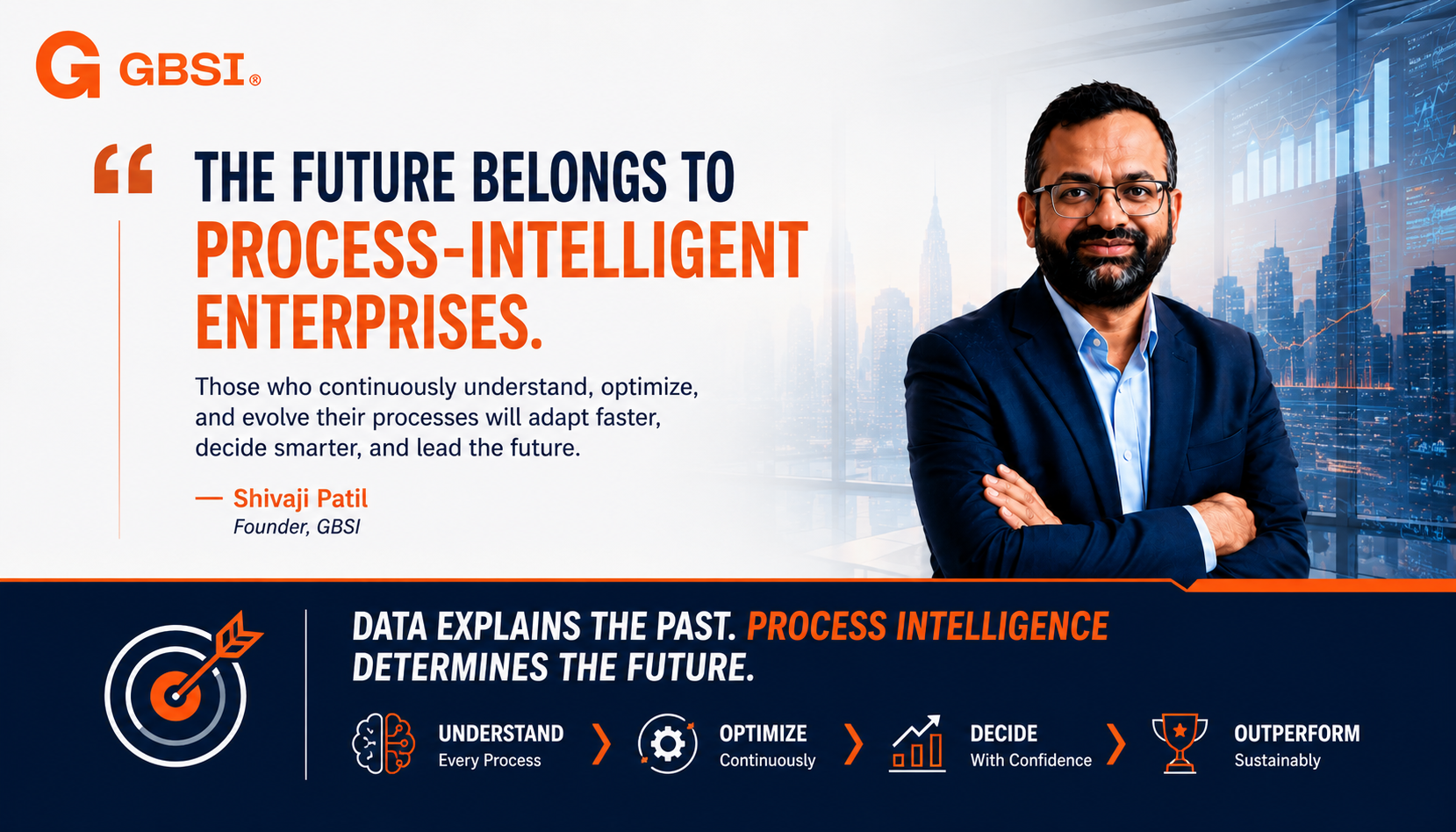
About the Author
Shivaji Patil is Founder of Genius Business Solutions (GBSI) and advises global organizations on SAP S/4HANA transformation, SAP EWM, supply chain modernization, business process optimization, enterprise AI adoption, and digital transformation strategy.