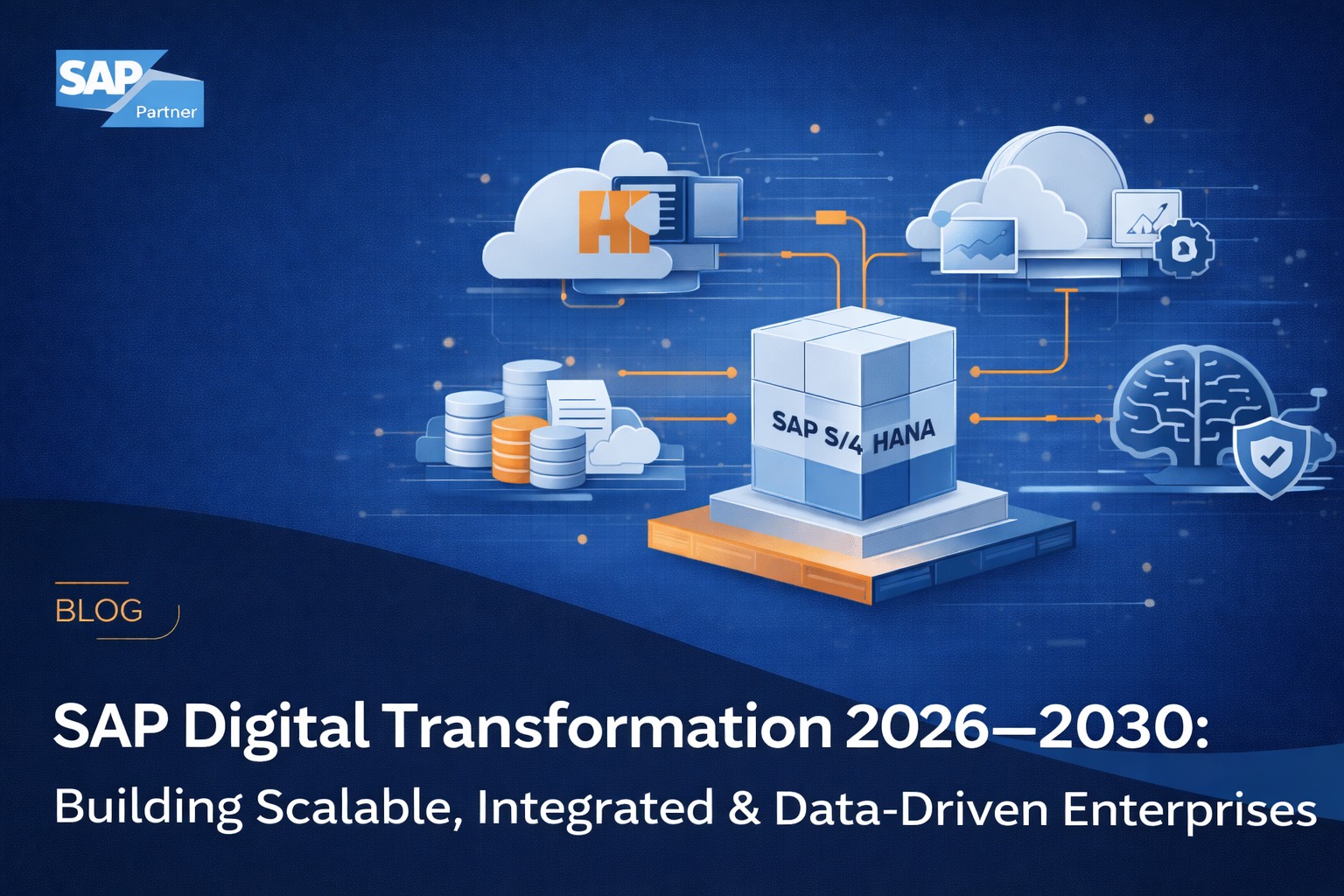
Introduction: Why Digital Transformation Still Struggles
Many enterprises have already started their digital transformation journeys. Cloud migration initiatives are underway, analytics platforms have been deployed, and several processes have been automated.
Yet many leadership teams still ask a critical question:
Why are the results not scaling across the organization?
The reason is simple.
Digital transformation is rarely a technology problem. It is an enterprise architecture problem.
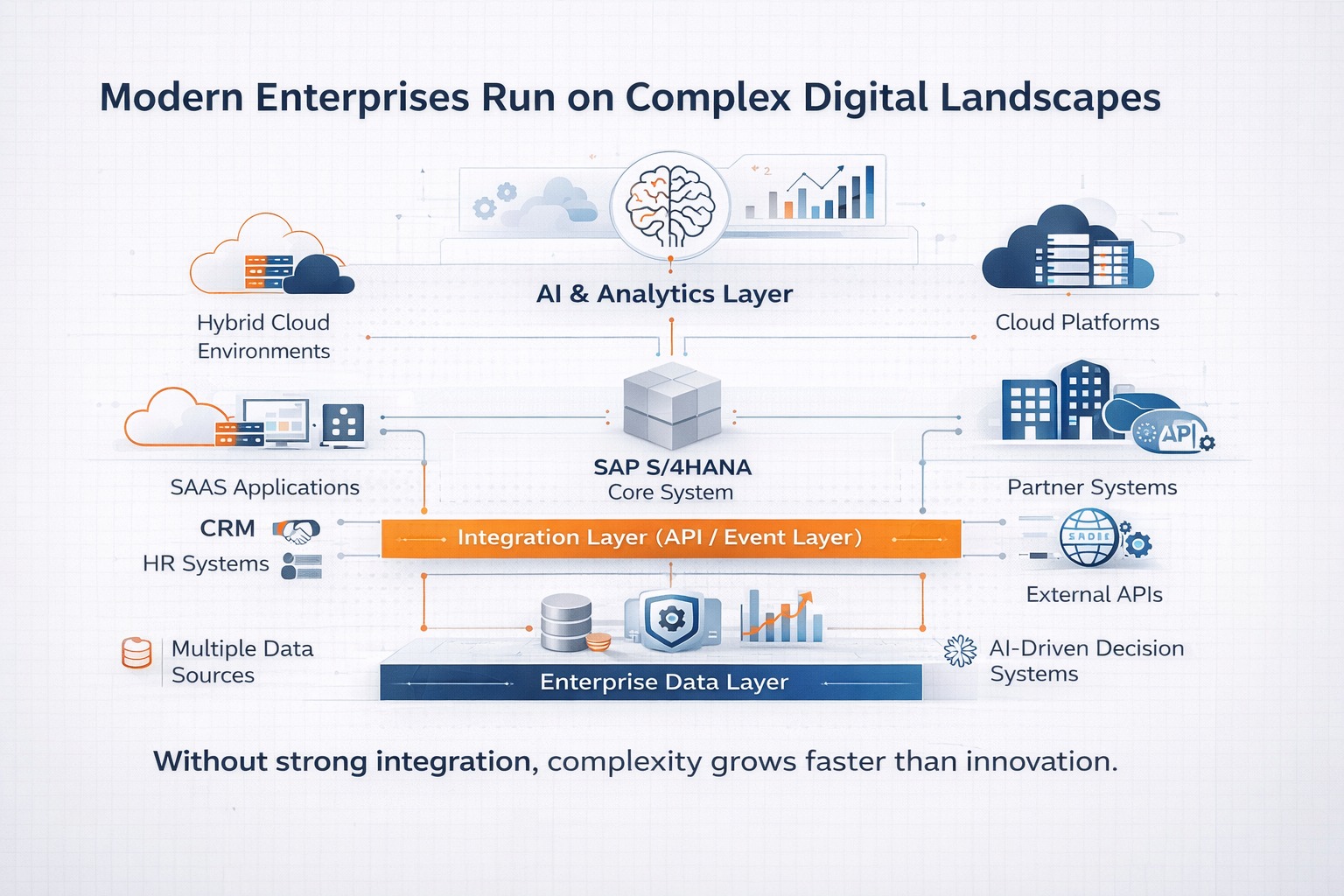
Between 2026 and 2030, organizations are facing a new level of complexity:
- Hybrid IT landscapes combining cloud and on-premise
- SAP systems operating alongside multiple SaaS platforms
- Increasing data volumes with inconsistent data governance
- AI initiatives requiring trusted real-time data
- Rising compliance and regulatory expectations
Without a unified architecture, transformation initiatives remain fragmented and fail to generate enterprise-wide value.
The Core Digital Transformation Challenges (2026-2030)
Across industries, three structural challenges repeatedly slow transformation initiatives:
- Integration across hybrid systems
- Extending ERP systems without increasing complexity
- Converting enterprise data into actionable intelligence
Solving these challenges requires an architecture-first strategy, not just new software tools.
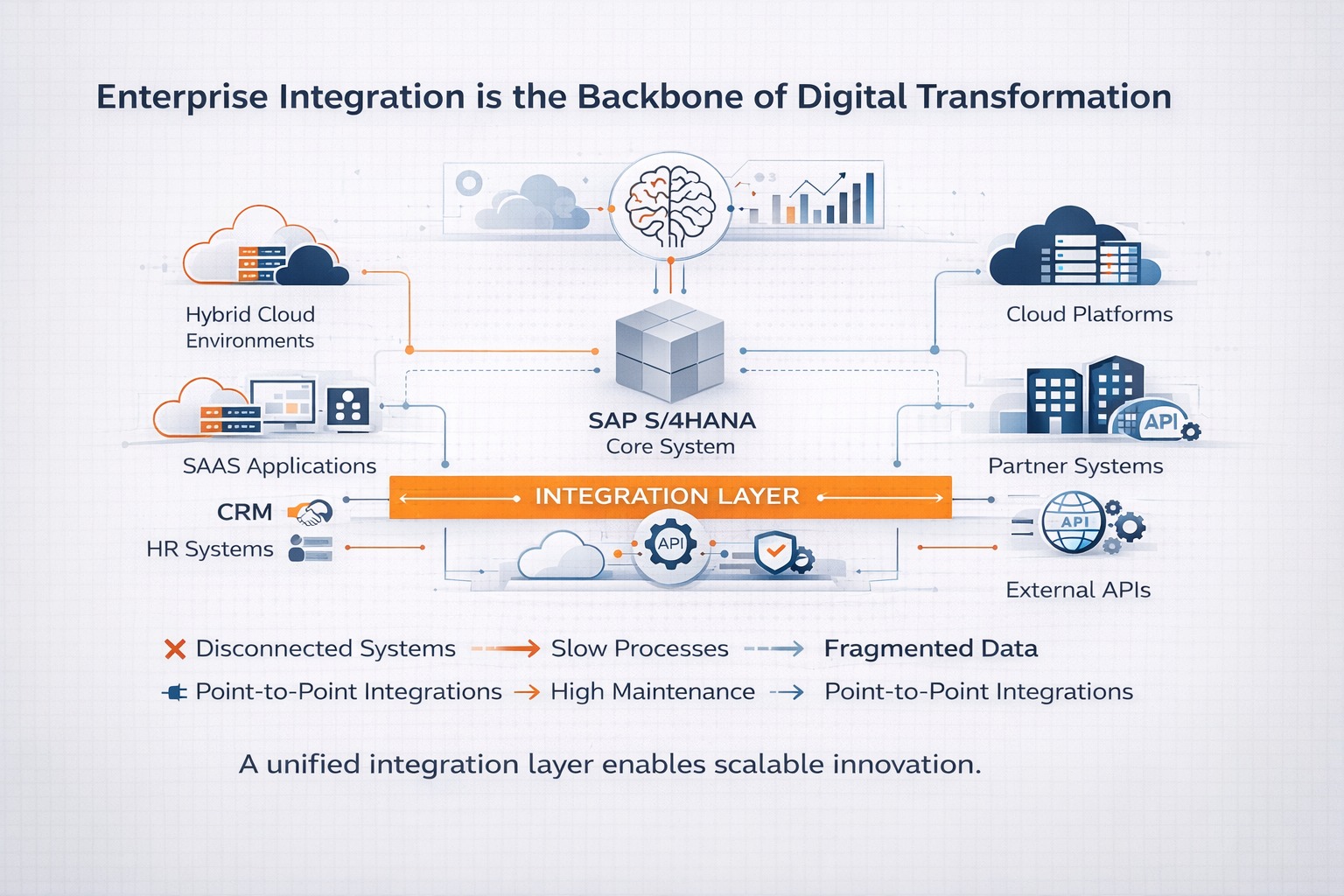
Challenge 1: Integration Across Hybrid and Multi-Cloud Systems
Most enterprises expected cloud migration to simplify IT landscapes.
In reality, it often created more complexity.
Organizations now operate with:
- SAP ERP systems
- Multiple SaaS platforms
- Industry-specific applications
- Legacy on-premise systems
- Multi-cloud environments
These systems must exchange data continuously while maintaining reliability and security.
Integration is no longer a technical task.
It is now a business capability that determines operational agility.
How SAP BTP Simplifies Enterprise Integration
SAP Business Technology Platform (SAP BTP) acts as a central integration and innovation layer across enterprise landscapes.
Instead of building isolated connections, companies can standardize integration through:
- API management
- Event-driven architectures
- Prebuilt integration packages
- Governance frameworks
This approach provides three major benefits:
Operational visibility
Organizations gain end-to-end process transparency across systems.
Faster innovation
New applications or services can be connected quickly.
Reduced integration complexity
Standardized integration models reduce long-term maintenance costs.
Challenge 2: Extending ERP Systems Without Breaking the Core
Enterprise systems must evolve continuously.
Businesses introduce:
- New pricing models
- Regulatory compliance requirements
- Custom workflows
- Industry-specific capabilities
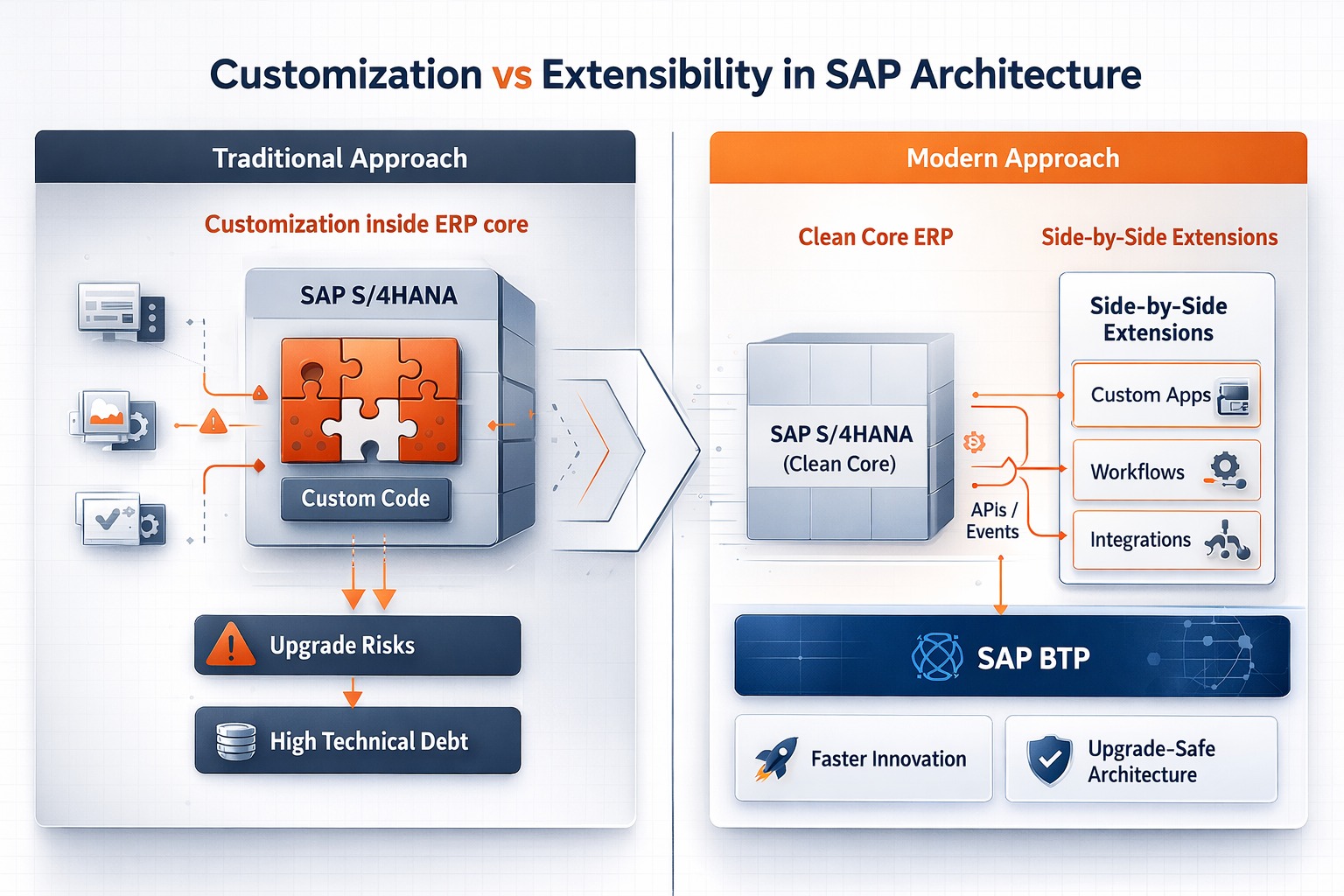
Historically, companies solved these needs by customizing ERP systems directly.
However, heavy customization introduces long-term problems:
- Difficult upgrades
- Increasing technical debt
- Slower innovation cycles
This is why modern SAP architectures emphasize the Clean Core strategy.
The Clean Core Strategy
In modern SAP architectures:
- SAP S/4HANA manages core processes
- SAP BTP manages innovation and extensions
This separation allows enterprises to:
- Upgrade SAP systems faster
- Develop new applications independently
- Maintain system stability while enabling innovation
Side-by-side extensibility ensures that custom logic remains flexible without disrupting the ERP foundation.
Challenge 3: Turning Data into Enterprise Value
Most companies today are not struggling with a lack of data.
They are struggling with data trust and accessibility.
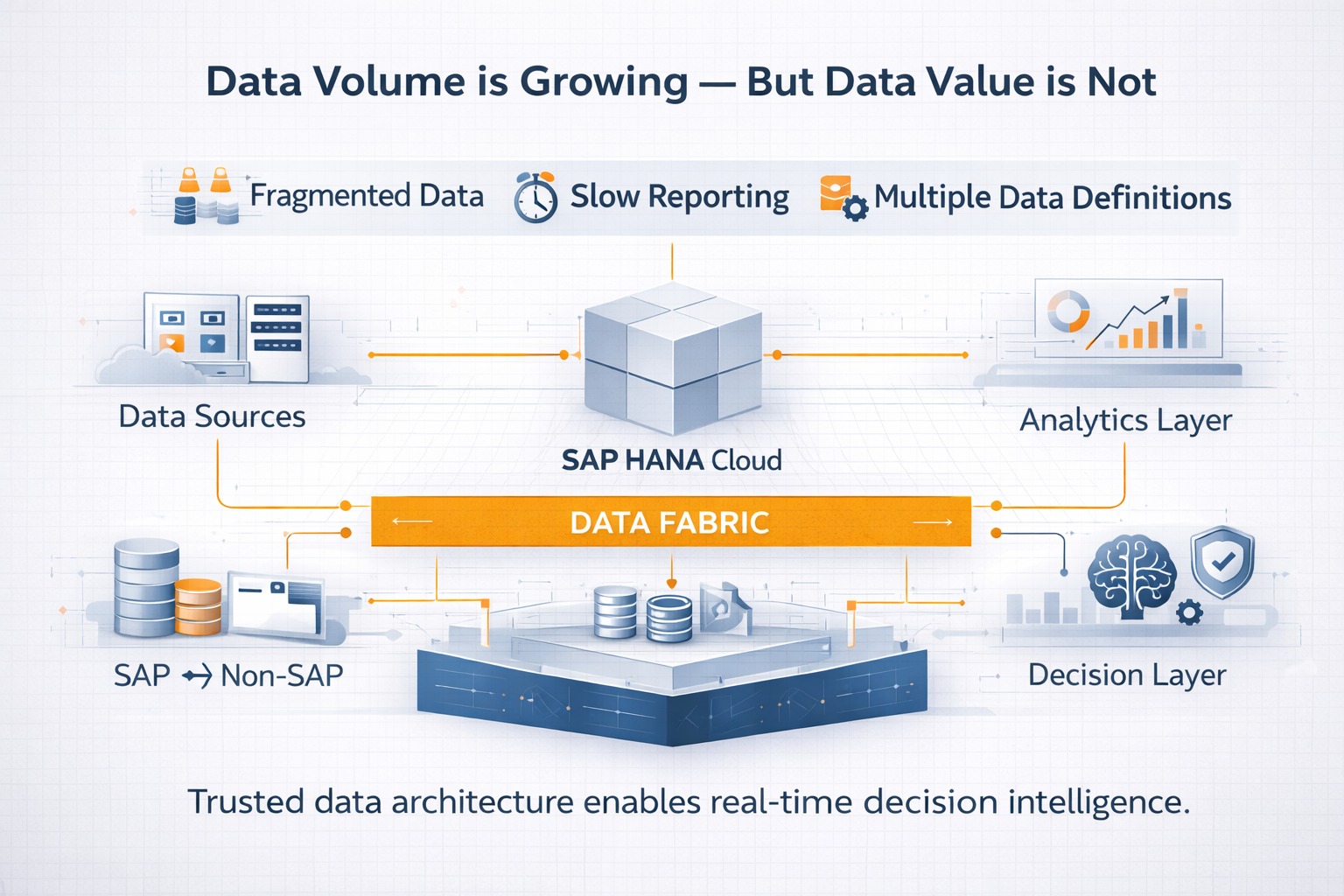
Common problems include:
- Fragmented data across systems
- Inconsistent master data
- Slow reporting cycles
- Poor data governance
These challenges prevent organizations from achieving real-time decision-making and AI adoption.
The Modern SAP Data Architecture
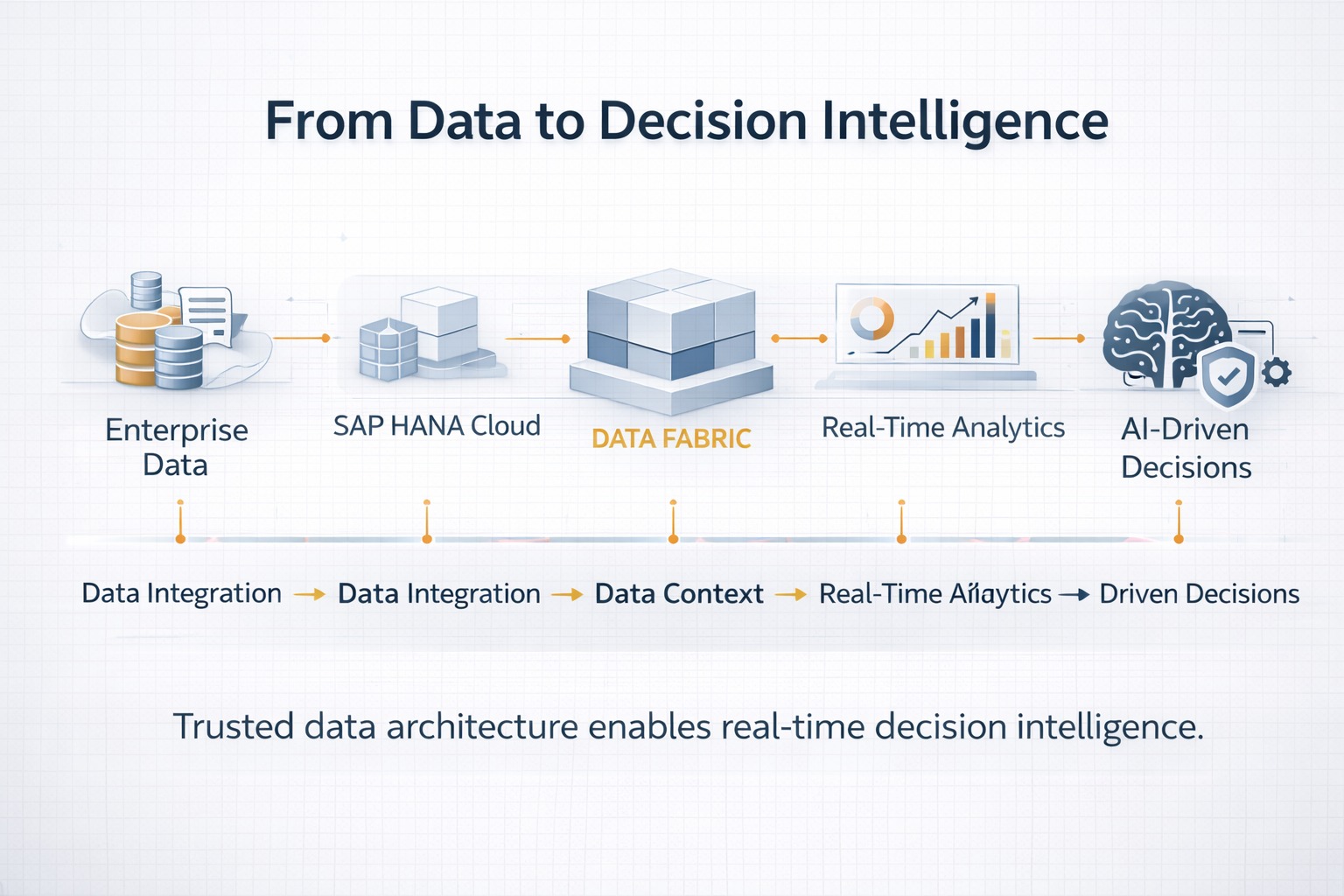
Modern SAP environments rely on three complementary layers.
SAP HANA Cloud
Provides high-performance processing and real-time transactional capabilities.
SAP Datasphere
Creates a unified business data fabric that connects SAP and non-SAP data sources while preserving business context.
SAP Analytics Cloud
Transforms trusted data into actionable insights through analytics, forecasting and planning.
Together these technologies enable organizations to move from historical reporting to proactive decision intelligence.
Why SAP BTP Is the Foundation of Digital Transformation
Across modern SAP landscapes, SAP BTP serves as the enterprise innovation platform.
It enables organizations to:
- Integrate SAP and non-SAP systems
- Build upgrade-safe extensions
- Manage enterprise data consistently
- Automate end-to-end processes
Rather than introducing additional complexity, SAP BTP creates a unified architecture layer that simplifies innovation.
Building a Structured Transformation Roadmap
Successful digital transformation requires more than technology adoption.
Enterprises must focus on three strategic steps:
1. Assess the Current Landscape
Evaluate integration maturity, customization footprint and data governance.
2. Define Business-Driven Priorities
Transformation initiatives should align with measurable business outcomes such as:
- Faster product launches
- Improved operational efficiency
- Better decision-making
3. Establish Governance Frameworks
Architecture governance ensures that technology decisions remain consistent across the organization.
How GBSI Helps Enterprises Transform Their SAP Landscape
At GBSI, digital transformation initiatives begin with architecture strategy rather than technology deployment.
Our SAP experts help organizations:
- Design scalable enterprise architectures
- Implement SAP BTP as an integration and innovation platform
- Enable clean core strategies for SAP S/4HANA
- Build real-time data foundations
- Accelerate enterprise automation and analytics
The focus is not simply implementing tools.
It is building digital foundations that scale with business growth.
Conclusion
Digital transformation will continue evolving through the end of this decade.
The organizations that succeed will not be those that deploy the most technologies.
They will be the ones that build adaptive enterprise architectures capable of supporting continuous innovation.
By leveraging SAP S/4HANA, SAP BTP, and modern data architectures, enterprises can create integrated, extensible and data-driven environments ready for the next generation of digital business.